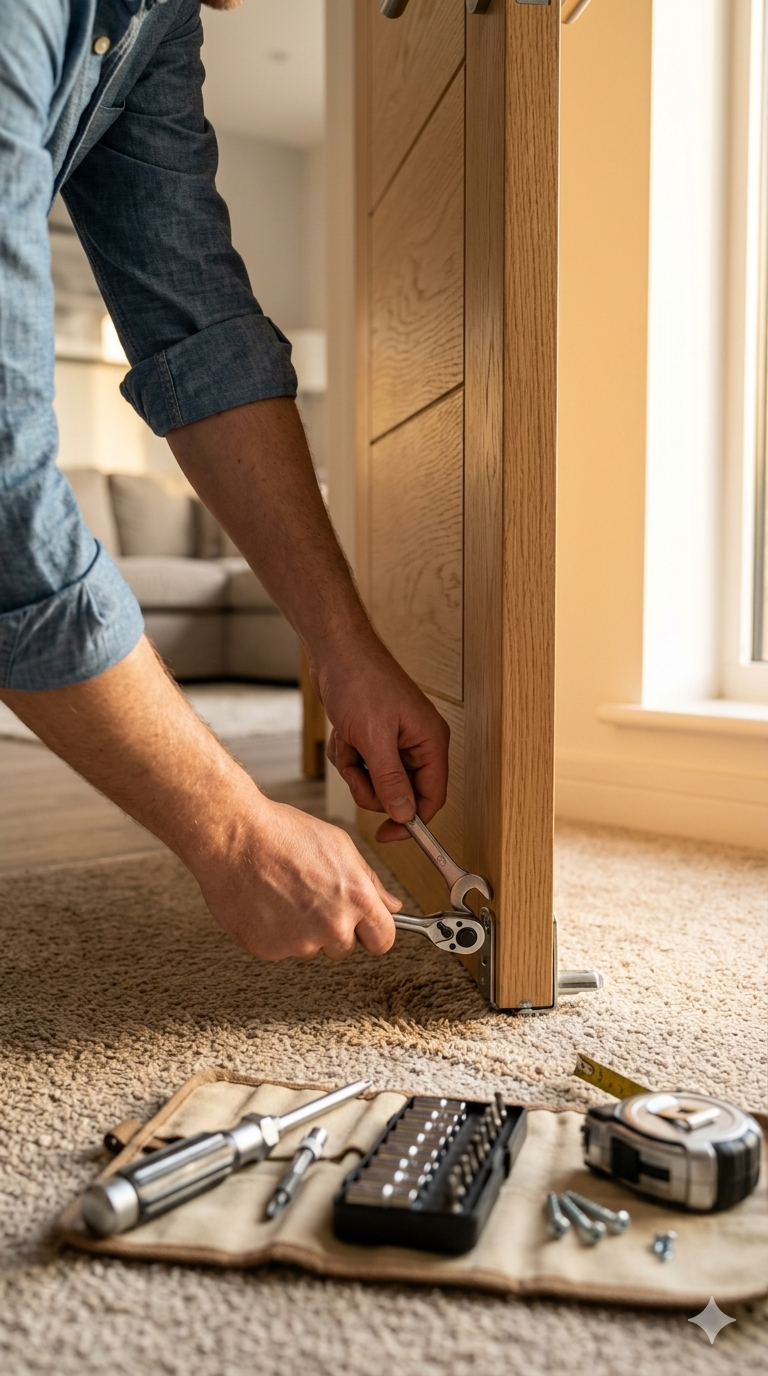
Doors that scrape the carpet not only look unsightly but can also damage flooring over time. The good news is that a quick door bottom adjustment often solves the problem without calling a professional.
Quick Tip: Before replacing parts, turn off the water supply and take a quick photo of the tap setup. It makes reassembly much easier.
Understanding Why the Door Rubs on the Carpet
Common Causes
The most frequent reasons include an uneven floor, a door that has settled over time, or a bottom strip that is too long. When the door sags, the lower edge drags against the carpet fibers, creating wear and noise.
Tools You’ll Need
- Screwdriver (flat‑head or Phillips, depending on your door hardware)
- Measuring tape
- Pencil for marking
- Adjustable hinge pins or a door bottom trim kit
- Level (optional but helpful)
Step‑by‑Step Door Bottom Adjustment
- Inspect the door and carpet to see where contact occurs. Open and close the door slowly, noting the exact spot where the bottom meets the floor.
- Measure the gap between the door bottom and the carpet. If the gap is less than 1/8 inch, the door is too low and needs adjustment.
- Locate the hinge pins or the screws that hold the door bottom trim. Use a screwdriver to loosen them just enough to allow movement without removing the door completely.
- If the door has an adjustable hinge, tap the pin upward with a hammer and a block of wood to raise the door slightly. Re‑check the gap after each small adjustment.
- For a door bottom trim, loosen the mounting screws and slide the trim upward or trim the excess material. Aim for a 1/8‑ to 1/4‑inch clearance.
- Once the desired clearance is achieved, tighten all screws and hinge pins securely. Test the door several times to ensure smooth operation.
- If the door still rubs, consider adding a small shim under the hinge side to level the door frame.
Practical Tips for a Long‑Lasting Fix
- Check the floor level first; an uneven subfloor can cause recurring rubbing.
- Use a soft‑rubber door sweep instead of a hard metal one to protect the carpet.
- Regularly lubricate hinge pins with a light oil to prevent squeaks that often accompany rubbing.
- When adjusting, make small changes and test frequently; this avoids over‑raising the door.
Frequently Asked Questions
Why does my door rub on the carpet only at the bottom?
Because the bottom edge is the lowest point and bears the most weight, any sagging or improper clearance will cause it to contact the carpet first.
Can I adjust the door without removing it?
Yes, most adjustments are possible by loosening hinge pins or trim screws while the door remains in place.
What if the carpet is too thick for a standard door bottom adjustment?
Consider installing a door sweep with a longer blade or adding a thin shim to raise the door slightly.
Is a door bottom adjustment the same as a door hinge fix?
Not exactly; hinge fixes address squeaks and alignment, while a door bottom adjustment focuses on the clearance between the door’s lower edge and the floor.
Where can I learn more about fixing door hinges?
For a detailed walkthrough, check out our step‑by‑step guide to quiet, smooth doors: How to Fix a Door Hinge Squeak.
Need help with another home fix? Keep this guide handy and check your taps, drains, and fixtures regularly to catch small problems early.
Conclusion
Fixing a door that rubs on the carpet is a straightforward task that saves you time, money, and protects your flooring. By performing a simple door bottom adjustment, you’ll enjoy smooth, quiet doors and a longer‑lasting carpet. Take the steps above, apply the practical tips, and your home will feel more polished and well‑maintained.
You can also check this helpful external resource about door bottom adjustment.